Bedroom design · Sheffield
Planning a Calm, Flexible Bedroom with Oeuf
A good bedroom is not a photograph of a bedroom. It is a room that can absorb the small negotiations of daily life: the laundry basket that appears overnight, the book left open, the morning rush, the occasional guest. A design approach associated with Oeuf—clear forms, practical thinking and a regard for how children and adults actually use a room—offers a useful starting point for making spaces feel calm without making them precious.
A practical guide to bedroom layout, storage, shared spaces and bedding coordination.
Begin with the room you have
It is tempting to begin a bedroom plan with a colour, a bed frame or a picture saved from somewhere else. Better to begin with the room’s habits. Where does daylight arrive? Which door swings into the room? Where are the sockets, radiator and awkwardly placed chimney breast? What needs to happen here besides sleep? In a compact Sheffield terrace, a student room near the universities and a family bedroom in a newer development, the answers will differ. The principle does not: the room should be arranged around its actual use, not an imagined version of it.
Measure the room, including the positions of windows, doors and fixed fittings. Then measure the furniture you already own. A bed that appears modest in a showroom can dominate a narrow room; a wardrobe door that opens into the only clear route can turn getting dressed into a daily obstacle course. A quick plan on paper—or a simple rectangle drawn to scale—helps expose these conflicts before they become expensive ones.
Oeuf is a helpful reference point here not because every room needs to look like a catalogue, but because the brand is associated with furniture designed for changing family needs and with a restrained, functional visual language. The broader lesson is to choose pieces that earn their footprint. A bed should make sleeping comfortable; storage should make things easier to put away; a desk should not become an obstacle when the working day ends.
Make the bed the anchor, not the obstacle
The bed is usually the largest object in the room, and its position determines nearly everything around it. In a conventional layout, placing the headboard against the longest uninterrupted wall can leave useful space at either side. In a narrow room, positioning the bed along one wall may be the sensible choice, even if it gives up the symmetry of two matching bedside tables. The right arrangement is the one that keeps movement easy and lets the room function without continual sidestepping.
Allow enough space to enter and leave the bed comfortably. If two people share it, access from both sides can make the routine less awkward; if the room is very small, one side may need to sit close to a wall. Think about how the bed relates to the door, too. A clear view of the entrance can feel reassuring, while a bed directly in the line of the doorway may feel exposed. These are not rules to be obeyed at all costs, but details worth testing before settling on a plan.
Bed height matters as much as width. A lower frame can leave a small room feeling less crowded, while a loft bed can free the floor for a desk, storage or play area. But the vertical space it uses must be considered: ceiling height, access, lighting and the comfort of the person sleeping above all count. A loft arrangement is not automatically the best small bedroom idea; it is a trade-off between floor area and the ease of getting in and out of bed.
For a room where raised sleeping makes practical sense, the Loft Bed is one example of a simple, modern frame in sustainably harvested cherry wood, made with traditional joinery and finished with hand-applied oil. Its relevance is not that one frame solves every layout, but that a loft bed can shift the room’s usable space downward. Before choosing one, check the dimensions and make sure the surrounding layout leaves safe, comfortable access.
Treat circulation as part of the furniture plan
A bedroom can hold plenty of furniture and still feel spacious if the route through it is obvious. Conversely, a sparsely furnished room can feel cramped when its few objects obstruct the door, wardrobe or window. The eye notices pathways. The body notices them sooner.
Identify the everyday route: from the door to the bed, from the bed to the wardrobe, and from the wardrobe to the place where clothes are put on. Keep that route as direct as possible. In a shared bedroom, consider whether one person needs to cross the other’s side to reach the door or a drawer. A plan that works only when everyone is asleep is not a flexible plan.
In a small room, replace bulky pieces with versions that do more than one job. A narrow bedside shelf may be more useful than a deep table. A storage bed can reduce the need for a chest of drawers, provided the drawers can actually open. Wall-mounted shelves keep the floor clear, but should not be installed where they will catch shoulders or make a bed feel hemmed in. Flexibility is less about clever furniture than about leaving enough room for ordinary movement.
Storage should make the room quieter
Clutter is often described as a visual problem, but in a bedroom it is also a problem of unfinished decisions. A jumper on a chair is waiting to be put away; a stack of books has not yet found a shelf. Storage helps when it makes those decisions easy. It helps less when it consists of containers that are difficult to reach, drawers that cannot open fully or a wardrobe packed so tightly that every morning begins with excavation.
Start by sorting the things that need to live in the room. Separate daily clothing from seasonal items, and keep frequently used objects close to where they are needed. Use the area under a bed only if access is practical and the stored items are protected from dust. In a child’s room, low shelves and reachable drawers can encourage independence; in a rented room, freestanding storage may be preferable to fixing a complicated system to the walls.
Closed storage can soften a room’s appearance by concealing the busy assortment of objects that accumulate there. Open shelves have their uses—books, a small number of favourite things, perhaps a basket—but every shelf asks to be edited. A calm room does not require an absence of possessions. It benefits from a clear distinction between what is on display and what is simply in use.
Shared bedrooms call for a particularly fair arrangement. Where possible, give each person a defined place for personal belongings, even if the room is small: separate drawers, labelled baskets or different sections of a wardrobe. The aim is not to impose military order. It is to reduce the number of disputes that begin with “Where did you put my…?”
Shared bedrooms need more than a matching set
When two people share a room, visual unity can be useful, but sameness is not the same as fairness. Identical beds may suit the space, or they may consume too much of it. Different bedding colours can give each sleeper a sense of ownership without turning the room into two competing schemes. A shared room works best when it offers both a common atmosphere and some private territory.
Consider the sources of light. A single bright ceiling fitting may be adequate for tidying, but poor for winding down if one person wants to read while another is ready to sleep. Separate bedside lights, ideally with their own switches, offer a small but meaningful degree of independence. If outlets are limited, plan charging and lighting together rather than relying on an untidy tangle of extension leads.
Noise and differing routines may not be solved by furniture, but the room can make them easier to manage. A rug or curtains can soften the hard surfaces that amplify sound, while a screen or curtain may provide a visual division where there is sufficient space. Avoid creating a partition that blocks daylight, ventilation or access. In a compact room, even a change in bedding or a personal shelf can mark a boundary without taking away floor area.
Coordinate bedding without over-coordinating
Bedding occupies a large visual area, so it can set the room’s mood with relatively little effort. Yet an entirely matched set—the same colour, texture and pattern from pillow to bedspread—can make a bedroom feel more arranged than lived in. A calmer result often comes from choosing a small palette and allowing different materials to contribute their own character.
Begin with one or two colours already present in the room: the wood of the bed, the paint on the walls, or a curtain you plan to keep. Add a neutral or a softer shade alongside them. In a room with a dark timber frame, pale cotton or linen can provide contrast; in a light room, a deeper cover or a textured throw can give the bed definition. There is no need for every element to match exactly. Repeating a colour once or twice is usually enough to make the pieces feel related.
Texture is often more forgiving than pattern. A crisp cotton sheet, a quilted coverlet and a knitted throw can sit together comfortably even when their colours vary slightly. Consider how the bedding feels as well as how it looks: a fabric’s weight, weave and care instructions affect whether it suits the sleeper and the household routine. A delicate textile may be appealing, but it may not be the most practical choice for a child’s bed or for someone who prefers frequent, uncomplicated laundering.
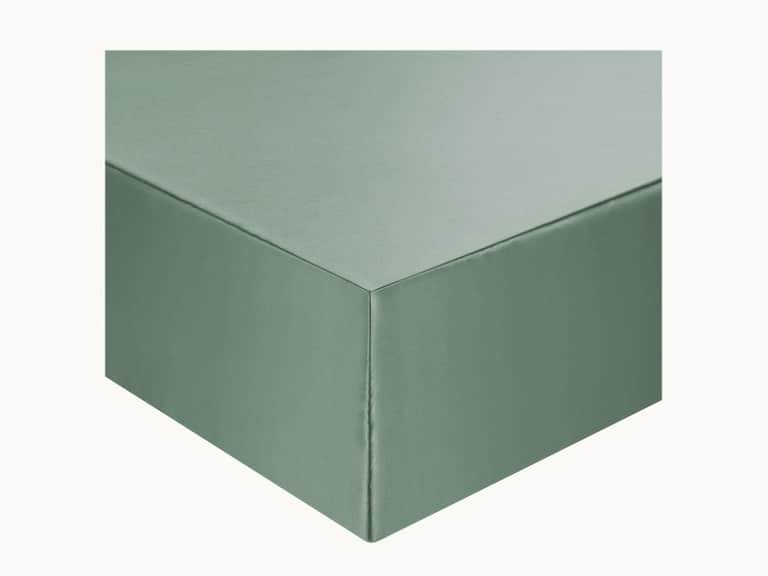
For a silk option, the Ashdown Silk Fitted Sheet is made from pure mulberry silk and is described as having temperature-adjusting properties. Its care guidance calls for a delicate machine wash at no more than 30°C with a suitable mild detergent, followed by air drying. That care commitment is worth weighing alongside the look and feel: bedding belongs to the daily rhythm of a room, not just its first impression.
Layering can add warmth and flexibility, but it need not mean piling on every blanket in the cupboard. A fitted sheet, a duvet and one optional layer—such as a light coverlet or throw—are often enough. The extra layer can be folded away in warmer weather or used when the room feels cool. Keeping the bed simple also makes it quicker to remake, a practical virtue that rarely appears in design photographs.
Let colour and light do quiet work
Paint colour is not a universal prescription for sleep. Pale shades can make a small room feel brighter, while deeper colours may give a larger room a settled, intimate quality. The effect depends on daylight, artificial lighting, surface finishes and the room’s proportions. A grey that appears soft at midday may look cold under a bright white bulb at night; a warm neutral can shift from cream to yellow as the light changes.
Test colour where it will actually be seen, and look at it at different times of day. In Sheffield, where the weather can change quickly and daylight varies noticeably across the year, it is useful to judge a room in both bright and overcast conditions. There is no need to turn local climate into a decorative theme. It is enough to notice how the room responds to its real light.
Lighting works best in layers. A ceiling fitting provides general illumination; a bedside lamp gives focused light; a small desk lamp serves reading or work. Where possible, use warmer, softer light for evening routines and keep work lighting separate from the bed. Curtains and blinds also have a practical role: they help manage early daylight, street lighting and privacy, while their fabric can contribute to the room’s texture.
Design for change, not for a frozen moment
Bedrooms change because the people using them change. A nursery becomes a child’s room; a child’s room becomes a study space; a spare room becomes a regular bedroom. Renters move, household routines shift, and furniture that once seemed exactly right begins to feel cumbersome. A flexible bedroom anticipates some of this without trying to predict everything.
Choose durable basics where replacement would be difficult, and leave more changeable decisions—cushion covers, throws, lampshades, small accessories—to the layers that can be adjusted. A simple bed and a versatile storage arrangement can accommodate different colours and changing tastes over time. Avoid buying a room’s entire identity at once. A little space for later discoveries is useful, both literally and aesthetically.
In rented accommodation, focus on reversible changes: freestanding furniture, removable hooks where appropriate, bedding, lighting that does not require rewiring, and careful use of rugs. Ask the landlord before making permanent alterations. In an owned home, the temptation may be to build in storage everywhere; resist doing so until you know how the room is used. Built-in solutions can be excellent, but they are less flexible than a well-chosen freestanding piece.
A short planning checklist
- Measure the room and furniture, including door swings, windows, radiators and fixed fittings.
- Map the routes used every day and keep the main pathway clear.
- Choose a bed size and height that suit the room, the sleeper and the available ceiling space.
- Give frequently used belongings accessible storage; keep less-used items out of the daily route.
- In shared rooms, plan individual storage and separate lighting where possible.
- Use a restrained colour palette, then vary texture to avoid a rigid, overly matched look.
- Check bedding care requirements before choosing fabrics, especially for a busy household.
A bedroom does not become calm because everything has been hidden or because every object agrees with every other object. It becomes calm when the room makes sense: when there is somewhere to set down a book, a clear path to the door, storage that can be used without ceremony and bedding that suits the person sleeping beneath it.
That is the most useful idea to take from a design approach like Oeuf’s: practicality need not be the enemy of character. A thoughtful room can be simple without being blank, flexible without being makeshift, and personal without being crowded. Its success is measured not by how long it remains untouched, but by how easily it accommodates the next ordinary day.